
All Together or None of Us
by Deniz Tapkan
Photography by Deniz Tapkan
During the winter months, I saw a sick cat in the garden, likely with an upper respiratory infection.
His tongue hung out, his fur and paws were in bad shape, and he probably couldn’t clean himself at all. He smelled bad. Although it upset me, I knew I couldn’t help him. I thought he wouldn’t survive the cold, so I just walked past him.
When spring came, I went down to the garden to run. After running, I sat on a bench to rest, and a cat jumped up next to me. It was the same cat. His mouth and nose were still running, and his tongue still hung out. But he looked into my eyes with confidence, as if to say, “Look, I’m alive! What’s next?”
Overwhelmed by the sad events in our country and the change in the animal protection law, I started to cry. I said, “If you resisted and survived, I will help you and heal you.”
I named him Niko.
The Animal Protection Law
The Turkish Animal Protection Law, amended in the summer of 2024, allows stray animals to be collected, kept in shelters, and euthanized if not adopted. The law mandates that all dogs be collected and locked in shelters. According to the Animal Rights Watch Committee, which monitors animal developments, only 273 of 1,111 municipalities have shelters. There isn’t enough capacity to implement this law, and news of animal killings began spreading even before it passed. Animals were reportedly being killed and buried in bags in areas under municipal responsibility, including Altındağ, Ümraniye, and Niğde. Additionally, neglected dogs were found hungry, thirsty, and abandoned in municipal shelters.
People’s reaction to this law, which cannot be implemented effectively, spilled onto the streets. Protests erupted nationwide, and the public widely called it the “slaughter law.” The opposition party leader stated he would not enforce it. Protesters chanted slogans such as, “Withdraw the law” and “Either all together! Or none of us!”
Right-to-life defenders launched a three-day hunger strike to strengthen the fight against the law. Their demands included constitutional protection for animals’ right to life, withdrawal of the law, a nationwide sterilization campaign, converting shelters into animal hospitals, and prohibiting animal production and sales.
Individuals stepped in to help animals, but doing so put their lives at risk.
Hatice Şükran, who fed street animals, argued with municipality officials who tried to take her dogs. Videos of the elderly woman during the confrontation went viral. Tragically, a suspicious fire broke out in her shelter that evening, and she died in her home.
Şevket Yerdeşen, who cared for animals on his street, was threatened and later killed in an armed attack on his home. Unfortunately, neither the opposition nor the government issued statements about the deaths of these compassionate individuals.
Introducing Kurtaran Ev
Amid these troubling developments, Kurtaran Ev (The Rescue House Organisation) stands out as a positive force. Founded in December 2019, it works to protect street animals and reunite them with owners. A dedicated managing team, supported by 30 salaried employees and volunteers, meets the shelter’s needs. Its largest campus is in Hadımköy, home to 1,000 dogs, while care and adoption efforts for 300 cats continue in Küçükçekmece and Beşiktaş.
Dogs rescued from poor conditions are examined, vaccinated, microchipped, and neutered. In 2024, 148 cats and 270 dogs found forever homes, while 2,500 cats and 2,000 dogs were neutered. Productive collaborations with brands and institutions have helped the shelter balance donations and expenses.
Those working for animals were deeply affected by these developments and experienced “rescue fatigue.” Some, suffering psychological effects such as depression, stepped away. While all challenges had impact, the regressive change in the Animal Protection Law ultimately forced animals onto the streets.
A yoga event with dogs was held at Locus Movement, a yoga studio. While instructors guided participants, the dogs wandered—watching, sniffing, or lying nearby. Some participants discovered their feelings toward dogs, enjoying the calm and peace of their presence.
The dogs, once loud in the shelter, harmonized with the tranquility of the yoga practice. Locus Movement has hosted this event three times, and past sessions have resulted in adoptions.
Adoption work is the most intensive effort at Kurtaran Ev.
They prepare adoption forms, meet with applicants, monitor the process, and guide animals to suitable homes. For the undecided or inexperienced, the organization brings people and dogs together at events. These interactions create meaningful experiences for both species.
Among all these efforts, some animals and humans form bonds that go even deeper, creating stories of connection that stay with you.
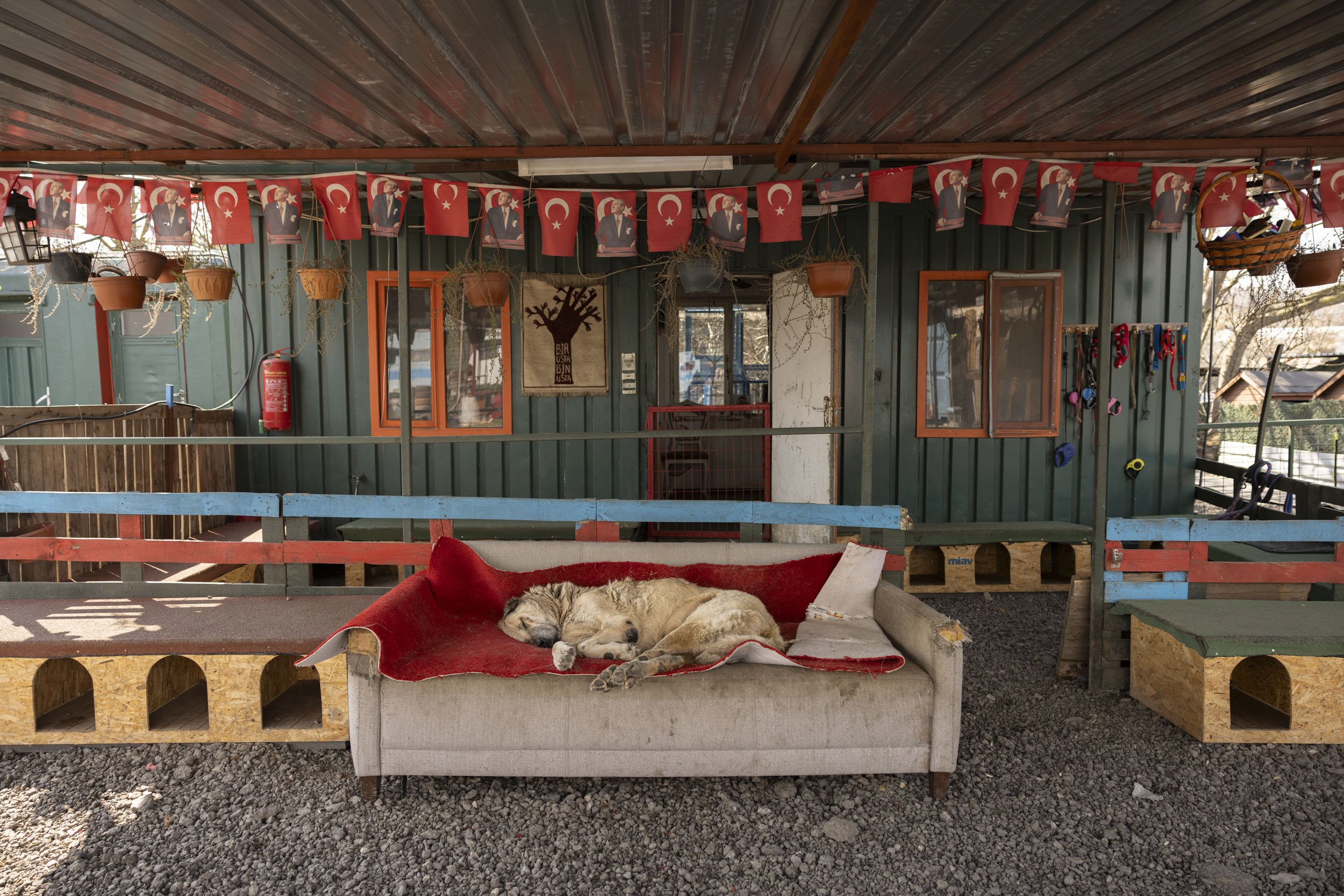
A dog sleeps on a couch at Kurtaran Ev in Istanbul, Türkiye, March, 2025.
In a conversation with Kurtaran Ev, I told them about Niko.
For a month, I had gone daily to clean him and add prebiotics, but he still had a slight discharge. They suggested bringing him in so they could treat his illness, neuter him, and return him. I was overjoyed. Caring for Niko every day—making sure he ate, was warm, and had water—had been mentally exhausting. I now better understand Frans de Waal: empathy is the blurring of the boundaries between oneself and another.
I am experiencing the sense of healing I need in Niko these days. He helped me as much as I helped him.
When I went to the garden, he was always there, like a wound that needed to heal, like a Kalben song on the radio:
“…It makes us forget our wounds,
Love that heals the wound,
is deeper than the wound.”
At 40, I discovered the depth of compassion thanks to Niko. He and I are now connected by invisible cotton threads.
As I healed him, I also healed.
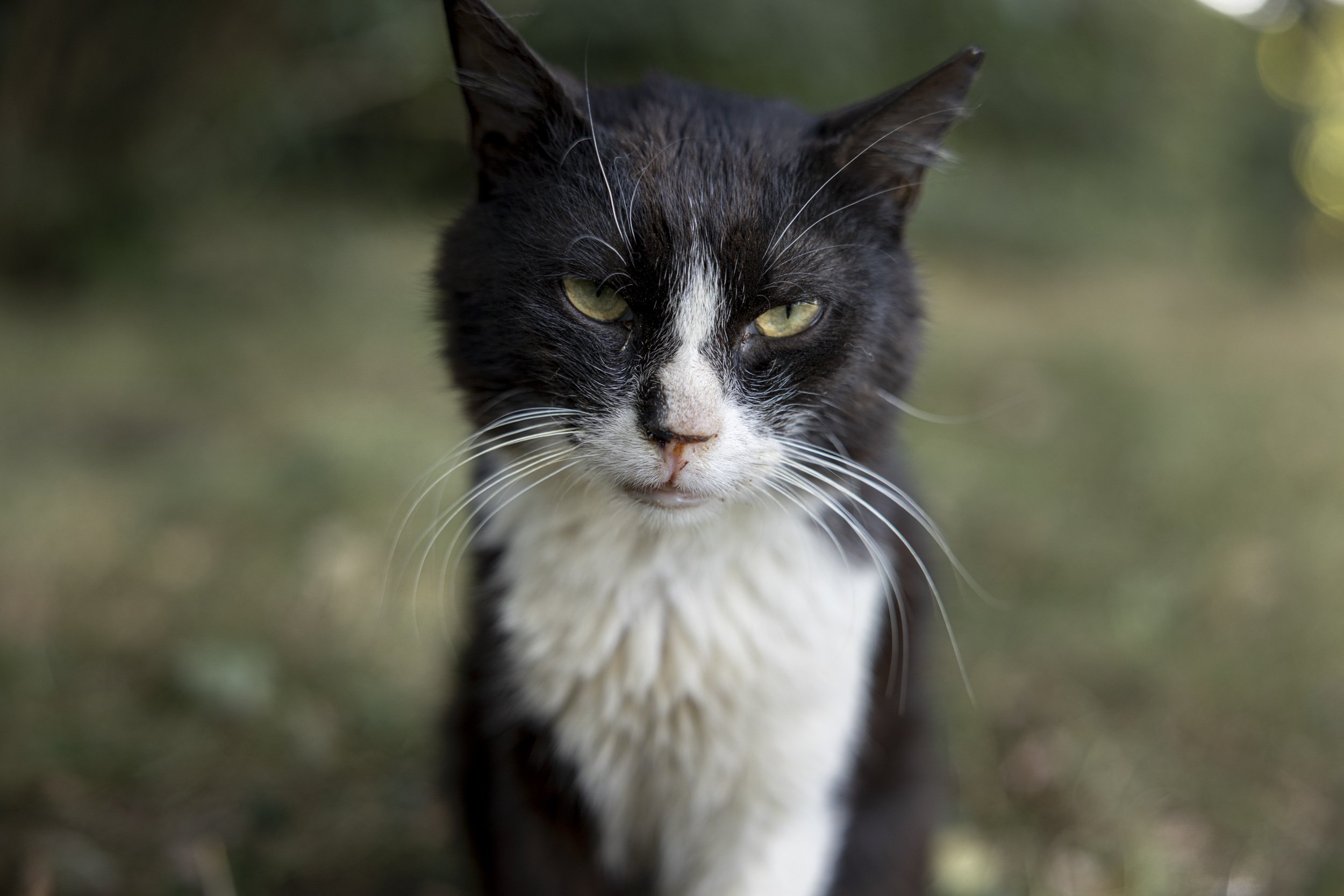
Street cat Niko, now in improved health, stands in a residential garden where he is fed and groomed daily by local people, Istanbul, Türkiye, July, 2025.
Deniz Tapkan is a Turkish photographer specializing in portraiture and animal photojournalism. As a contributing photojournalist with We Animals, she documents the lives of nonhuman animals through both professional and volunteer work. She is currently pursuing a master’s degree in cognitive ethology, studying animal minds, social recognition, and affiliation. Deniz is the author of Animal Politics on Substack.